

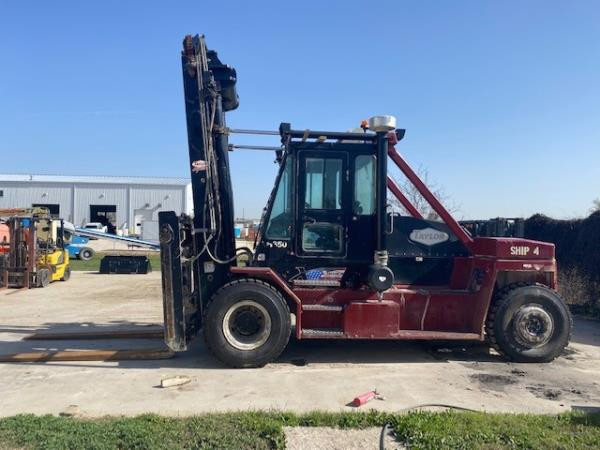
Make: TAYLOR
Model: TXH350L
Year: 2016

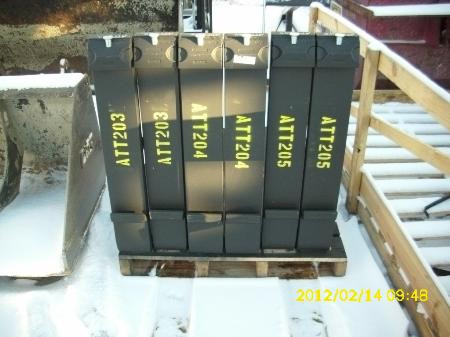
Make: Manitou
Model: 48" Forks
Year: 2012
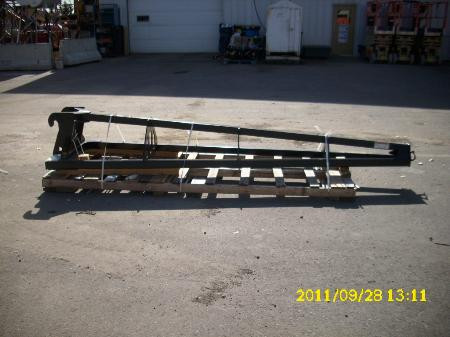
Make: JLG
Model: Truss Jib 12'
Year: 2011
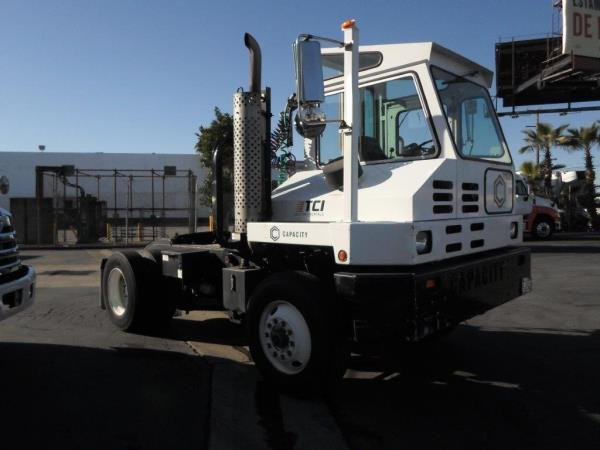
Make: Capacity
Model: TJ5000 DOT
Year: 2010
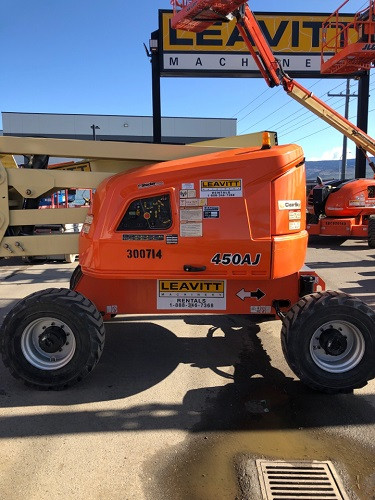
Make: JLG
Model: 450AJ
Year: 2016

Make: FrostFighter
Model: IDF350
Year: 2015
TCM Diesel Forklifts Long Beach
It was in the start of the 20th Century when the first forklifts were introduced. These machines over the past 90 plus years has revolutionized the material handling industries and even the recycling industry. The factors for safe operation, the forklift's evolution and the various different kinds are discussed below.
History of Lift Trucks
Powered industrial trucks are also called lift trucks and forklifts, were first launched and created during the late 19th Century. These initial models were low lift trucks which could raise platforms just several inches high. Generally, these kinds of equipment were used for moving material within a shop, such as work-in-progress situations. In the latter part of 1910s, high lift trucks first emerged and truck design improvements started to take root from there. The tier trucks ultimately evolved and this allowed for better stacking of loads and storage efficiency.
There were extremely difficult economic times throughout the 1930s. However, throughout this period, labor was freely available but money for investment was increasingly harder to come by. This situation significantly slowed the growth of forklift usage.
Lift trucks became a really strategic part of the World War II war effort as the vast shortages in manpower during that time occurred as a resulting of enlistment of thousands of men. It was discovered that its operator and the lift truck could deal with the work of many men and were extremely productive. As the War progressed, numerous women operators filled the many demands. When the war was over, forklifts became a mainstay of the material handling business. They were used a lot in the Pacific war efforts. A few of the leftover pallets and forklifts within Australia left behind by the U.S. Military became the basis for the Commonwealth Handling Equipment Pool or CHEP, who today is referred to as the world's largest pallet pooling business.
Diesel/Gasoline
There are many benefits to utilizing a diesel or gas powered engine. They are always available all around the world; they deliver consistent power throughout the shift, they are great for heavy duty workloads and many operators are quite familiar with the source of power.
Several of the gas and diesel engines drawbacks consist of: they need a lot more maintenance compared to electric models, due to the emissions they release, they are not suitable to be utilized indoors, there is some difficulty and cost connected to disposal of fluid and oil and they need a re-fueling station on-site if they are going to be in continuous use.
- Terex Articulated Man Lifts Long Beach
Different Types of Aerial Lift Aerial lifts are a specialized kind of heavy machinery that enables workers to be lifted into the air. These machinery can be used to perform maintenance and repairs in areas... More - Clark Diesel Forklifts Long Beach
Electric Forklift versus Diesel Forklift Forklifts can function one of two ways, either by electric motor or by internal combustion (IC) motor. Electric forklifts are best for indoor application and cost less to operate. IC... More - Skytrak Telescopic Forklift Long Beach
Cab Comfort To help increase their overall cab comfort, SkyTrak has taken some additional steps such as offering a spacious interior offering more operator space and 3-way adjustable suspension seating. The axles experience increased agility... More - Genie Electric Scissor Lifts Long Beach
Genie's DC models can be perfect options for optimal suitability in industrial work sites, especially when low noise and zero-emissions are required. Genie hybrid, bi-energy systems are available for applications where the equipment should drive... More - Jungheinrich Order Picker Forklifts Long Beach
There are safety and healthy guidelines governing the use of forklift trucks. Any large machinery, like a lift truck, is potentially dangerous and must be used safely. The regulations and rules state that the driver... More